Although this project was originally a short internship submission, I became interested in the topic and widened the scope, working on it beyond the original 2-week timeframe.
Personal project · Winter 2020
While mentorships offer a lot of advantages, they often disintegrate. How might we design for students to form stronger, lasting mentorships?
Overview
Time spent
1.5 months
Research
To understand more about mentorships and about my users, I sent a form to 45 people asking about their experience with mentorships, and read several articles on the topic.
Key research insights
- Mentorships are relationships: The focus of the product should be to enable constructive communication and personal connection.
- Both parties should have clear, joint expectations: Most people didn't know what a mentorship consisted of, which led to problems.
- Structure is helpful: People are often very busy, and without a solid plan mentorships get deprioritized.
Product features
- A solid profile building flow and messaging to enable connection.
- No pictures minimize the impact of appearance, and the possibility to request another mentor to respect the fact that sometimes pairings don't work.
- Pre-built programs, progress tracking and tips help guide users.
- Automation like pre-built plans, suggested conversation topics, and adding events to your calendar, save users time.
Design and testing
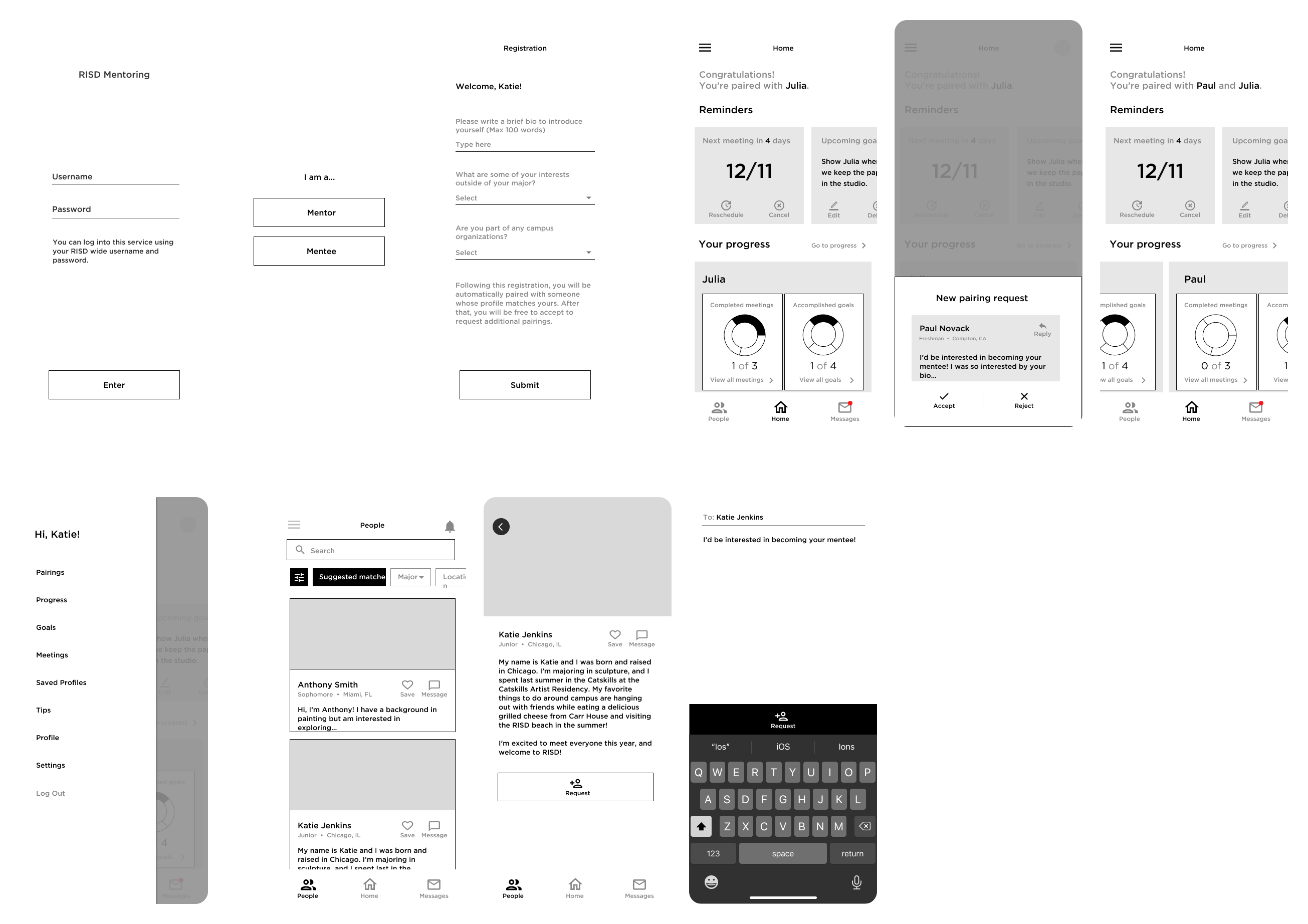
After building this rough sketch of some key screens, I tested my concept with 4 people to get their thoughts, and refined the design based on the feedback. What changed:
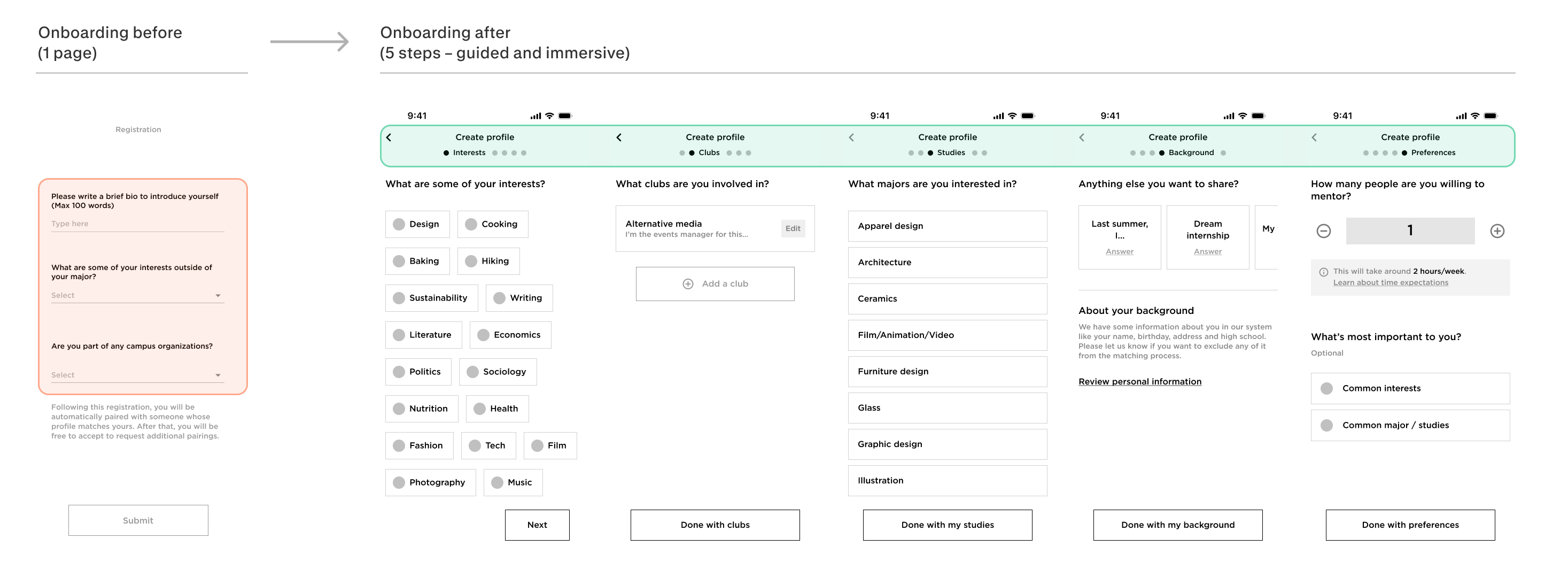
The onboarding flow:
- Before: The original onboarding flow was just one screen, with a generic “About me” that people didn’t know how to answer.
- Now: The onboarding flow is more comprehensive, with guided questions and optional prompts to encourage sharing more about oneself.
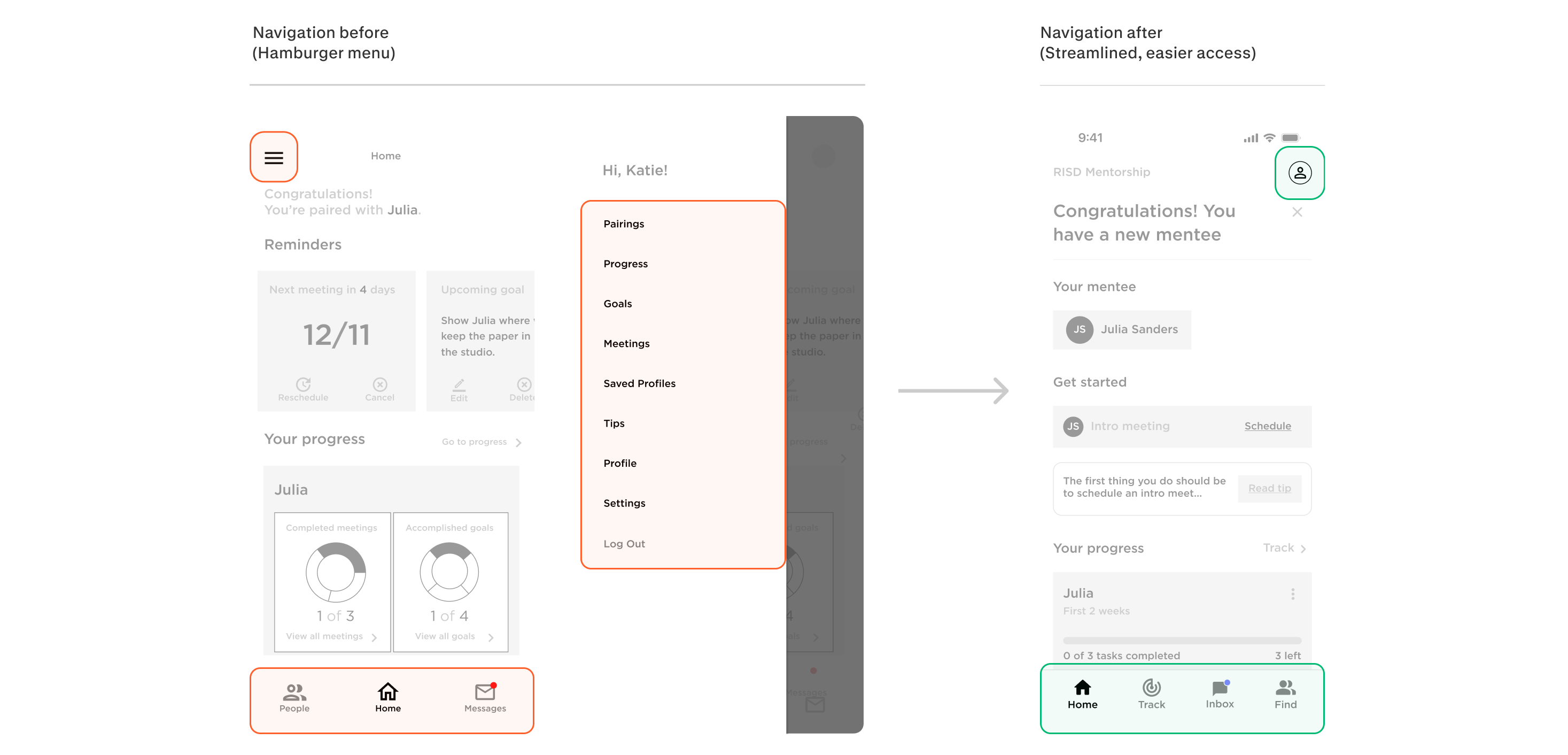
The navigation:
- Before: The main navigation had Profile, Home, and Messages, with 8 other pages under a menu. There were too many related pages that were hard to find.
- Now: Simpler navigation features Home, Track, Inbox & Find at the bottom, plus a path to Profile in the top right.
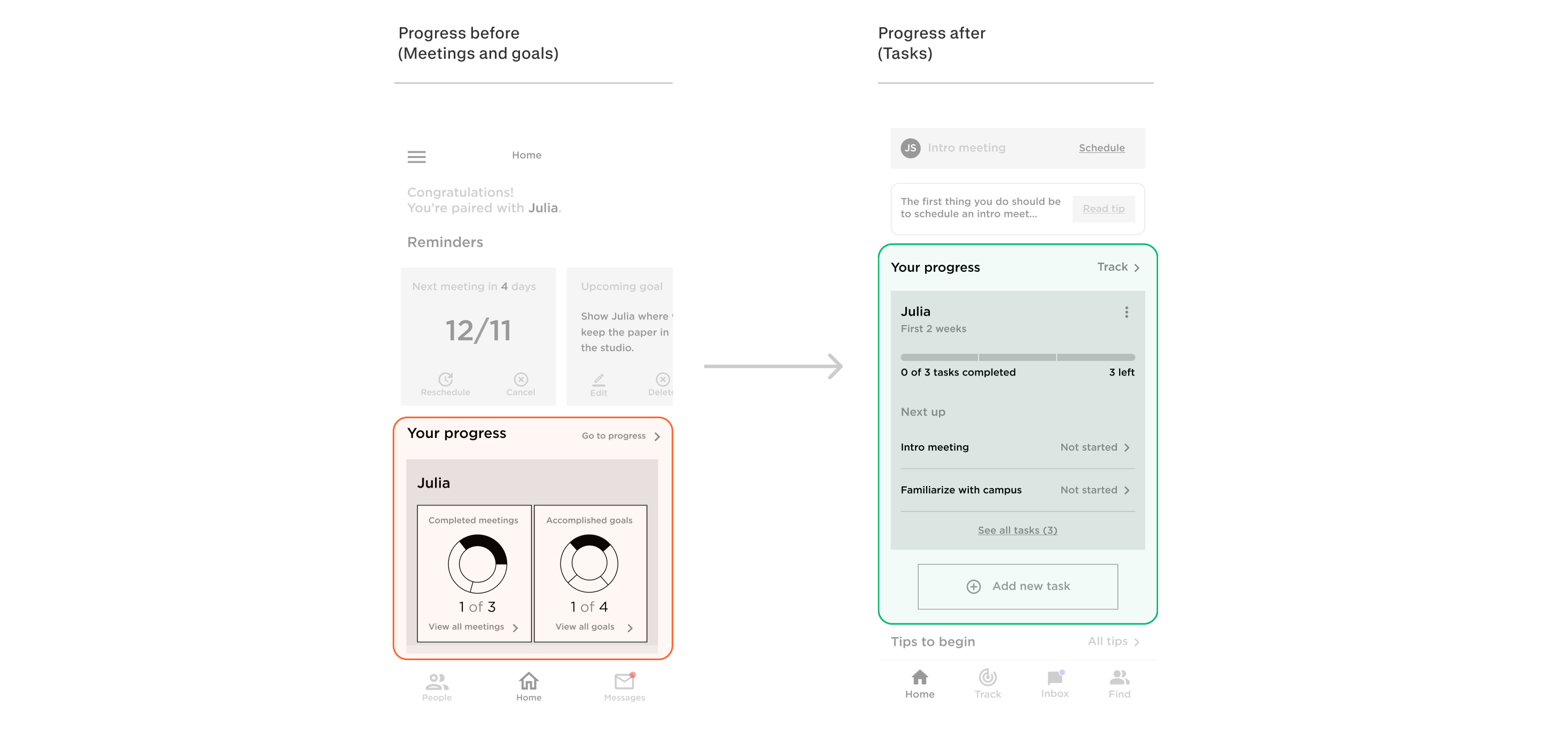
Progress tracking:
- Before: Progress was measured in meetings and goals, which was an unclear and unnecessarily complicated distinction.
- Now: Progress tracking is consolidated under tasks, which include meetings and other jobs like sharing information, work reviews, etc.
Final product proposal
RISD makes mentorships easy with embedded guidance and support at every step. Automated workflows, guided tasks, contextual tips and relevant content give users the tools they need to build valuable mentorships.
Style: The visual style follows the RISD brand, and feels put together (as an official school app) but also youthful, with fun pops of color.
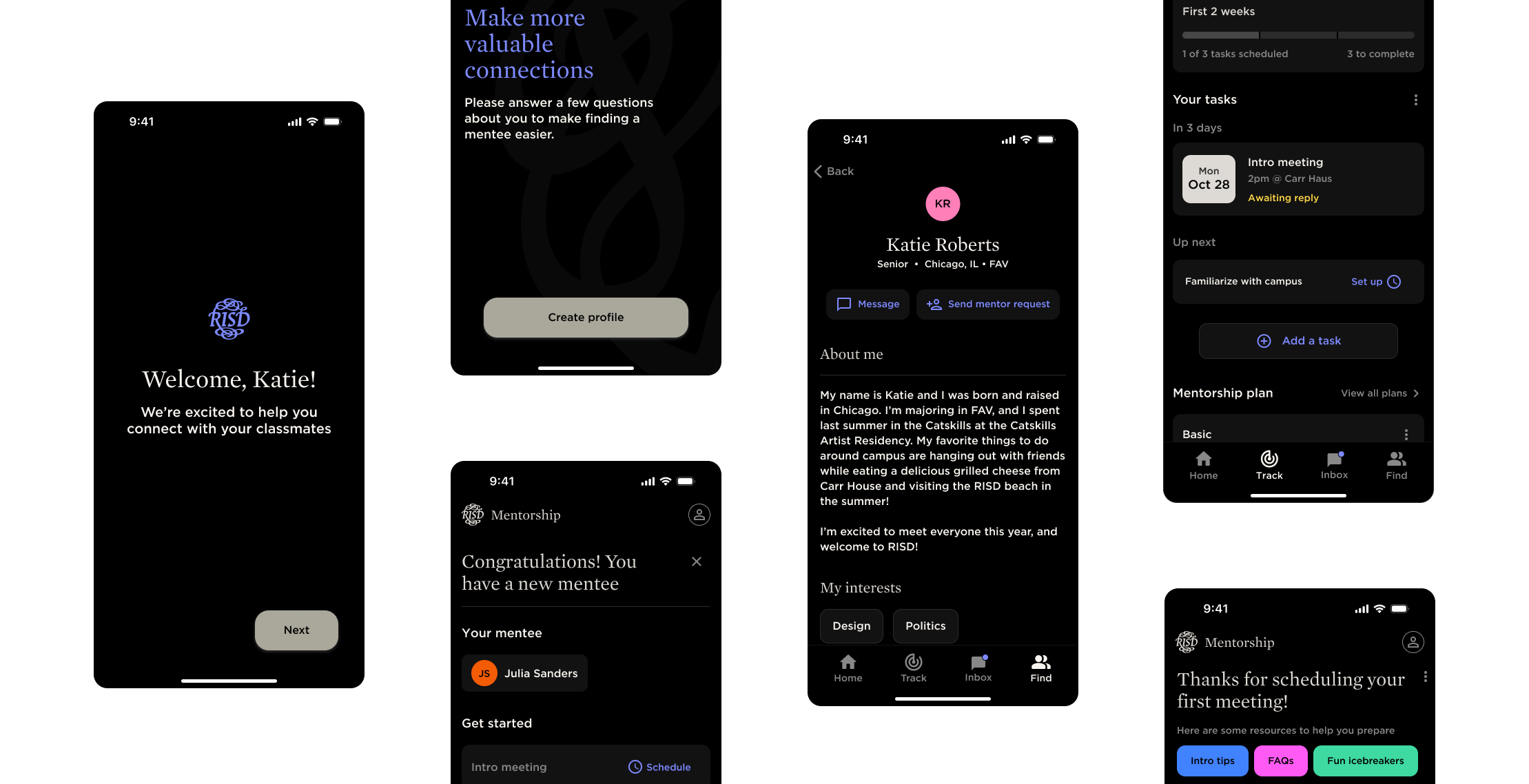
Signing up
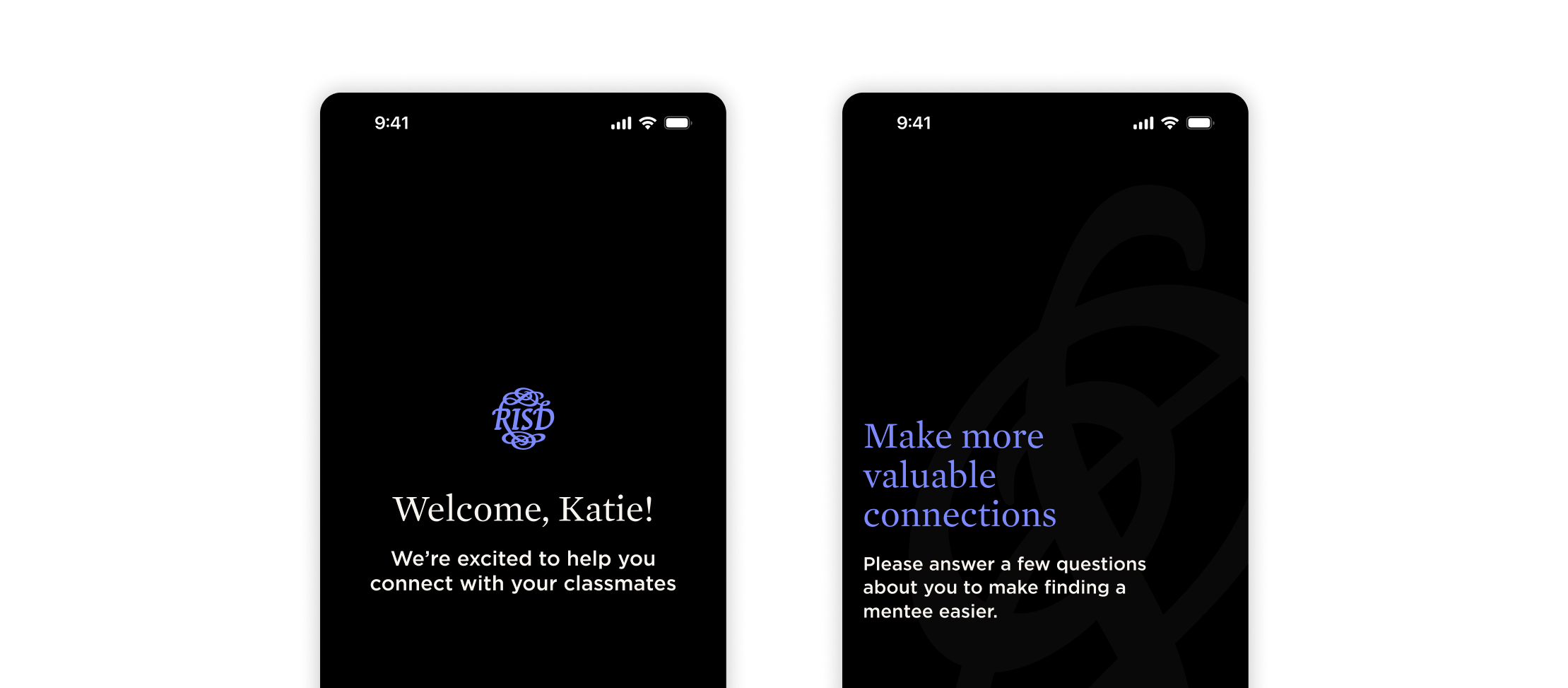
- Brief value-led intro.
- Guided profile setup.
- Optional prompts like Describe your dream internship encourage deeper sharing.
Getting started
- Empty states give users an immediate next step.
- Upcoming tasks based on customizable mentorship program offer a clear path forward.
- Contextual tips and resources help users feel prepared.
Requesting a mentor
- Mentees can browse mentor profiles with simple filters.
- No photos to reduce bias.
- Interstitial asks users to agree to time expectations to prevent overcommitting.
Takeaways
Mentorships are voluntary and without a pre-existing relationship, they require active effort. This makes them hard to stick with. Getting users to stay engaged without asking for too much attention is a difficult balance to strike—but also the type of thorny problem that makes design interesting!
Overall, this was a great project to familiarize myself with patterns like onboarding, progress tracking and contextual education.