Personal Positioning System

Personal Positioning System

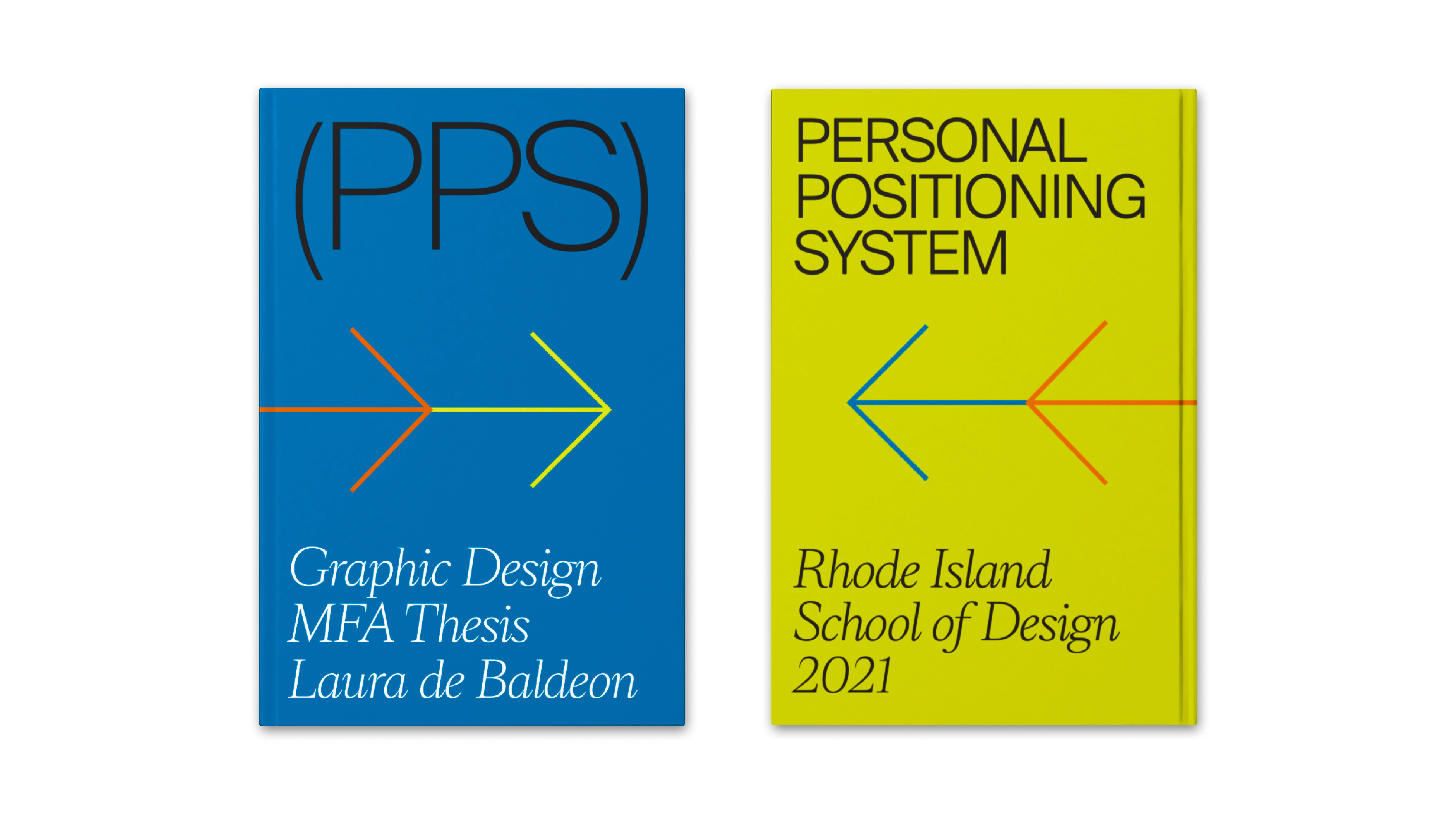
MFA Thesis on Interaction Design · Read the book

Overview

Personal Positioning System (PPS) explores the tension between physical and virtual motion.

In contrast to the GPS, which combines many data points to provide a specific representation of a position, PPS offers alternative ways of experiencing virtual location and presence. Overlaying intimate words and actions over the corporate outlines of the internet, it invites us to reflect on the physicality and intimacy of our digital lives.
Featured projects

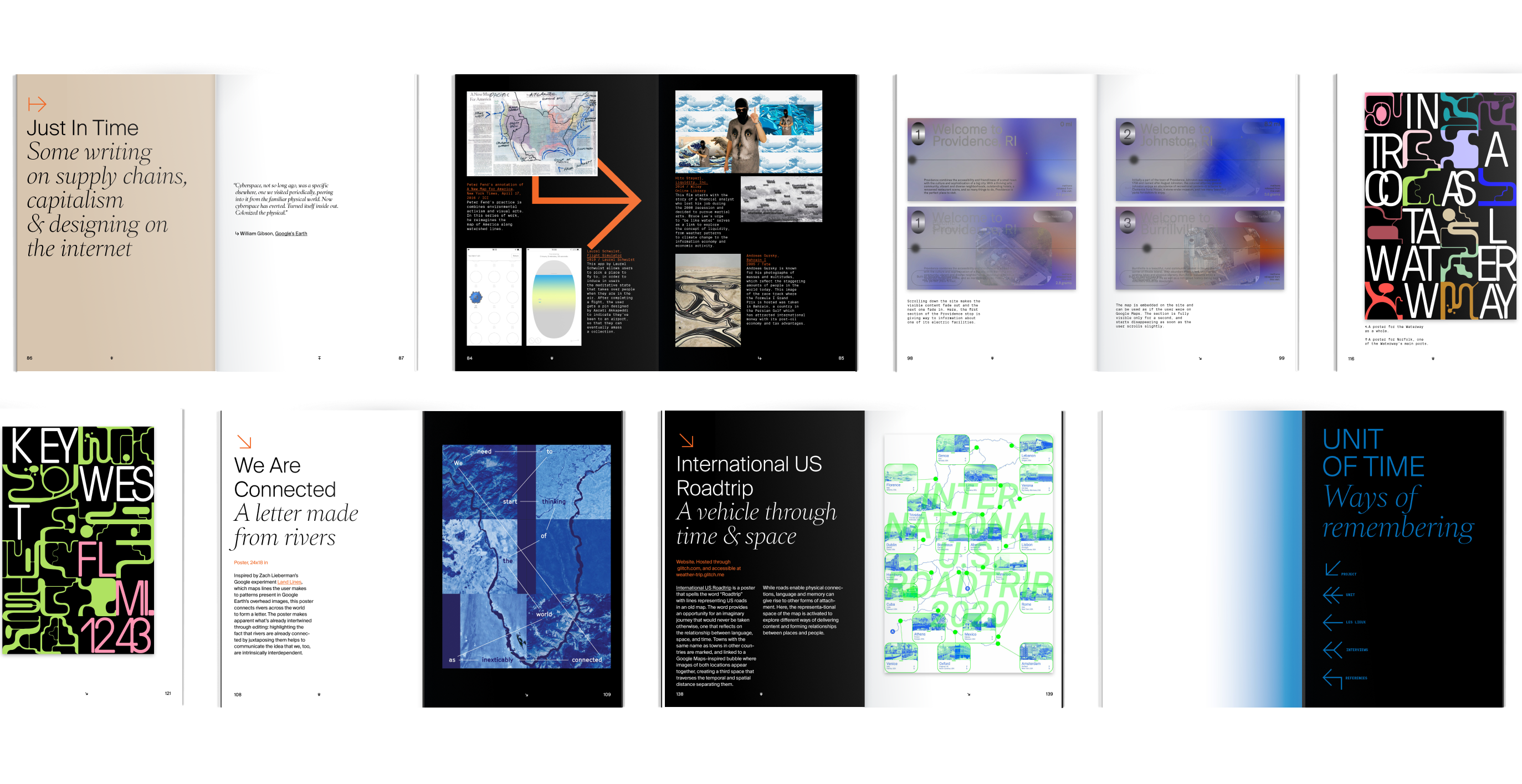
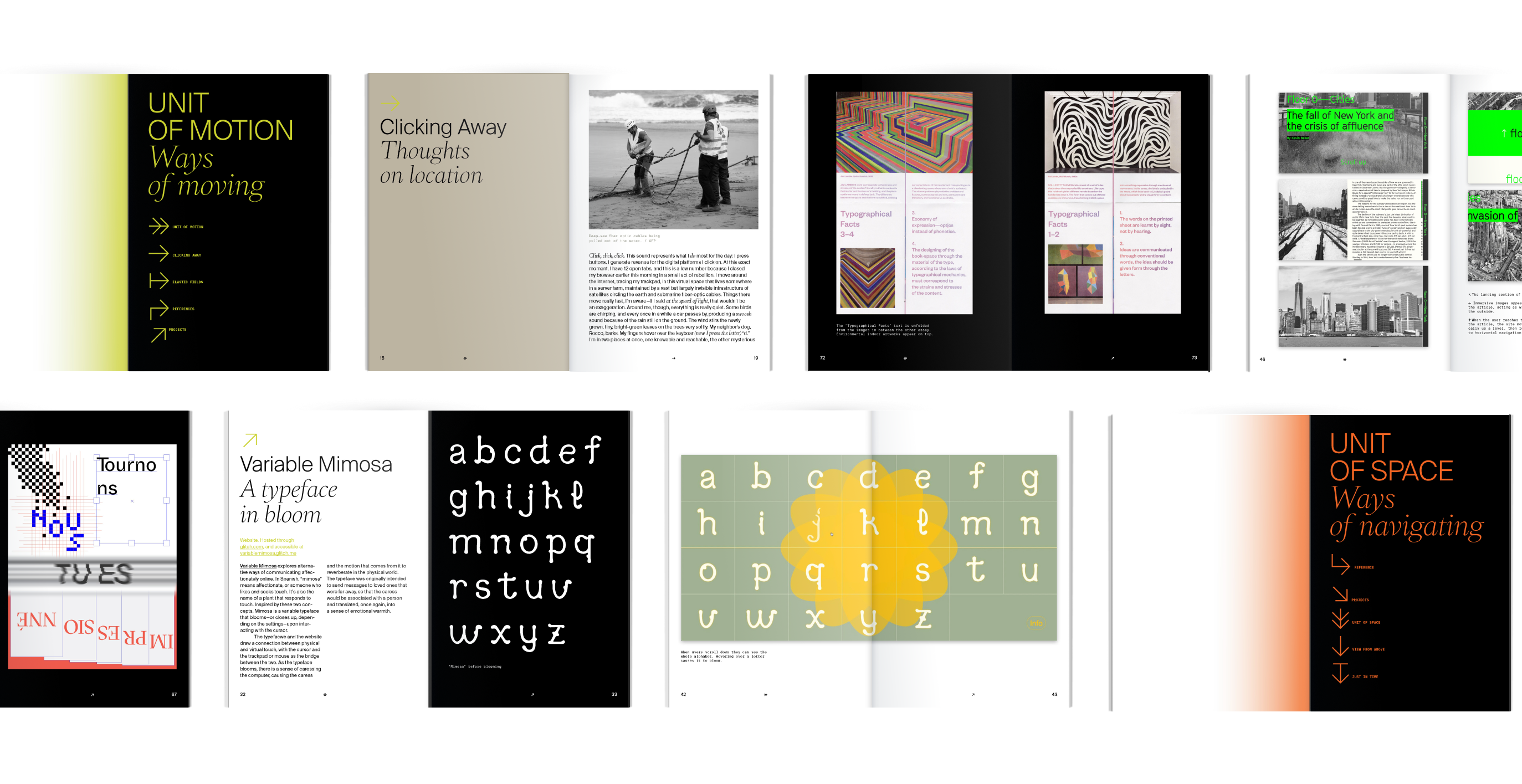
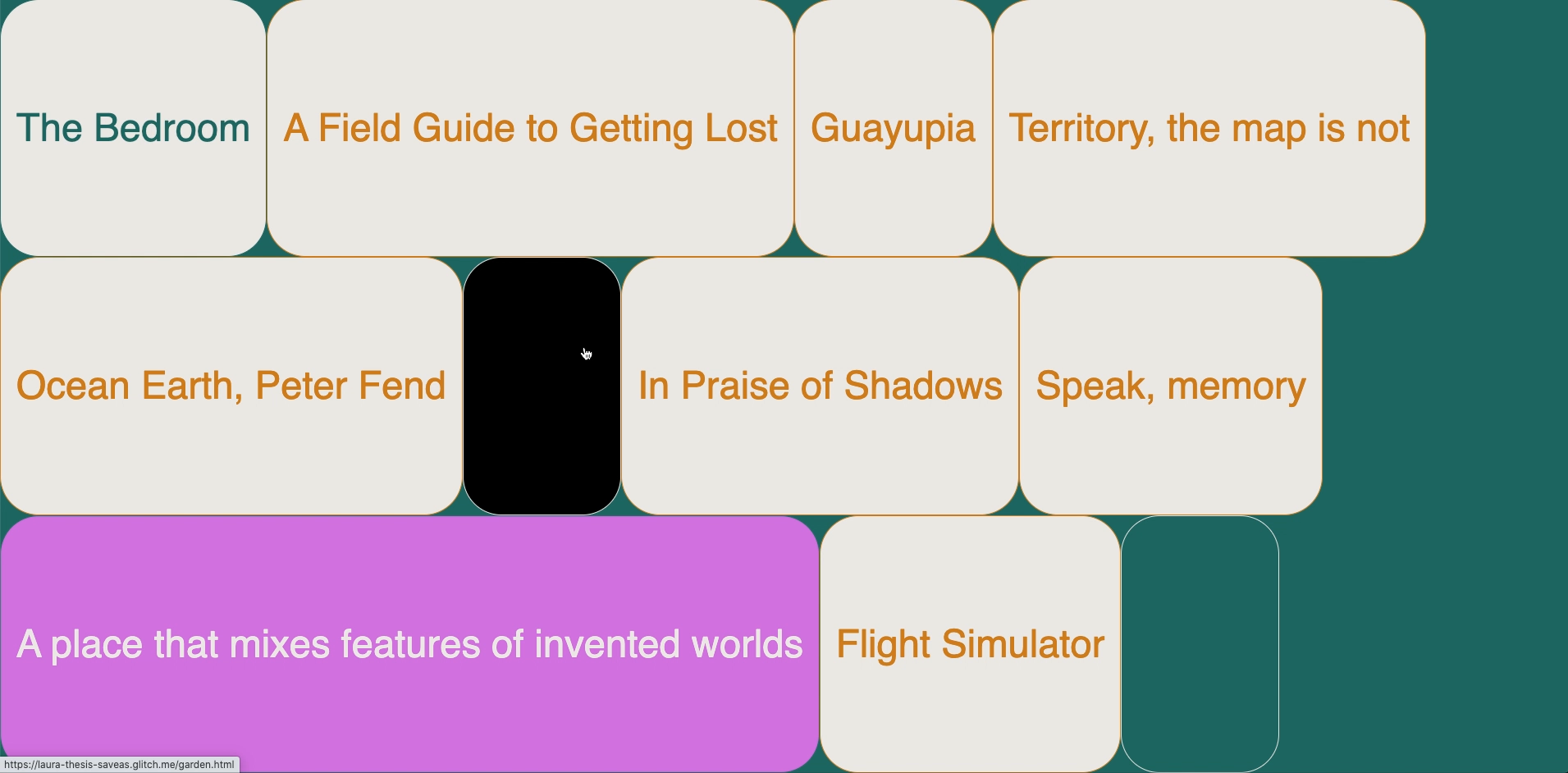
In between 3 opening essays, 2 longer form essays and 2 interviews with well-known designers, different projects are featured in each unit.

About the book

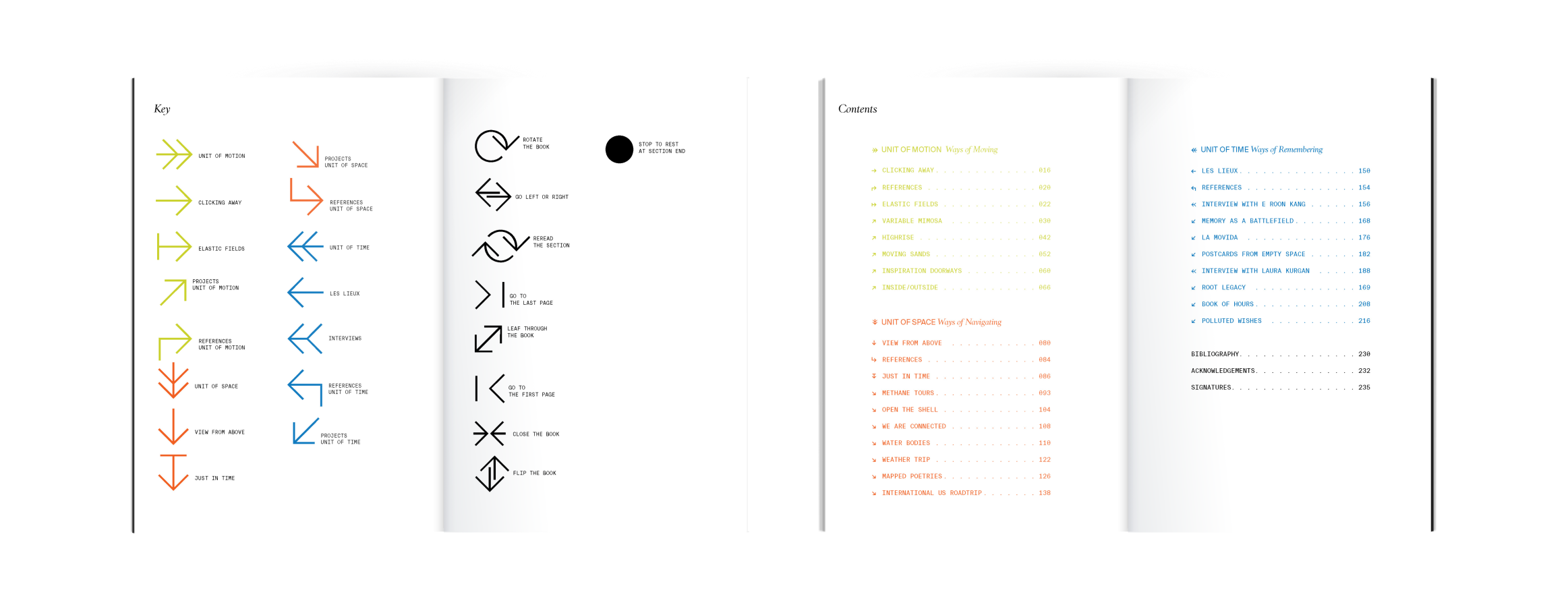
Since the thesis broaches the symbolic representation of space, the book uses directional symbols as a key.

Each of the book's chapters is assigned a different direction (unit of motion is left, as in going forward; unit of space is down, as in looking down from above; unit of time is right, as in looking back into the past). Each content type is assigned an arrow symbol, and within each chapter the sections' arrows point in that chapter's direction.

Within the chapters, each section is represented by a different kind of arrow pointing in the direction, encompassing a key through which to read the book. The key also includes other symbols that represent instructions and show up between sections, like "rotate the book," "reread the section" or "stop to rest." Overall, the book features 5 essays, 2 interviews, and 19 projects.